The Weight of Snow: Broken Limbs, Damaged Trees, and How to Stay Safe
Winter in Utah brings beauty, quiet, and fresh mountain snow, but it also places enormous physical strain on trees. Heavy and repeated snowstorms can break limbs, split trunks, and even uproot entire trees. For homeowners and landowners, understanding why snow damage happens and how to reduce the risk is an important part of winter property care.
Alpine Forestry helps communities maintain resilient and healthy forests year-round. Below is a guide to help you understand how snow affects trees and what you can do to stay safe during and after winter storms.
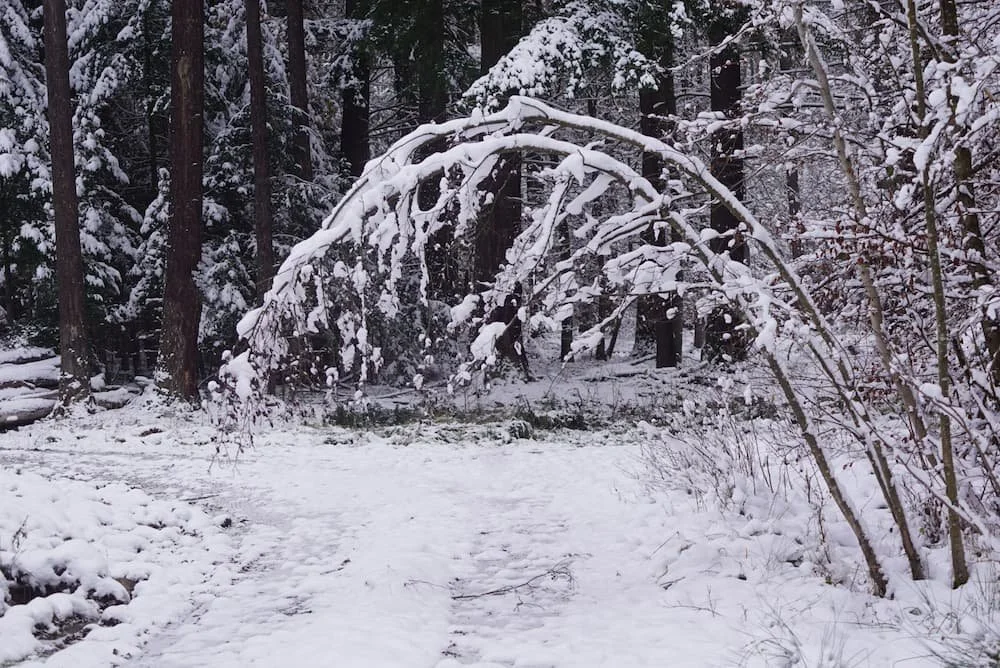
Why Heavy Snow Damages Trees
Winter storms are not merely a visual spectacle, covering trees in a beautiful white layer of frost; they also impose tremendous weight and pressure on trees. With every inch of snow that accumulates, additional weight is added to the branches and trunks. When paired with factors such as wind, freezing temperatures, or multiple successive storms, even the strongest trees can succumb to failure and damage.
How Snow Load Builds and Causes Stress
Snow load increases gradually as storms stack up. Branches bend under the pressure, and internal fibers begin to stretch. Once a limb reaches its limit, it cracks or snaps. Trees with long horizontal branches are especially prone to breakage, since surface area collects snow faster than upright or compact growth patterns.
Wet Snow vs. Dry Snow: Why It Matters
Wet snow is significantly heavier than powder. Early season storms with high moisture content often cause the most damage because trees still hold leaves that trap snow. Later in the season, cycles of melting and refreezing can harden snow into ice. Ice can multiply the weight and cause entire leaders or trunks to shear.
Tree Species Most Vulnerable to Snow Damage
Certain species tolerate snow better than others.
Broadleaf trees like cottonwood, aspen, and boxelder tend to hold snow, especially when foliage has not fully dropped.
Ornamental species with dense branching, such as willows and fruit trees, also break more often.
Conifers have evolved to shed snow, but varieties with multiple leaders or prior pruning injury can still fail during strong storms.
Common Signs of Snow-Related Tree Damage
It’s worth noting that not all storm damage on trees is immediately visible. Some issues may manifest over time, particularly as freeze-thaw cycles alter the texture and stability of snow and ice. Here’s what to look for:
1. Cracked or Hanging Limbs
One of the most alarming signs of damage is limbs that are cracked or hanging precariously. A limb that remains partially attached can fall without any warning, posing a danger when nearby driveways, sidewalks, or buildings. If you notice any hanging or split branches, it is advisable to seek professional removal before someone accidentally walks underneath them, potentially risking injury.
2. Leaning Trunks and Structure Failure
Heavy snow can alter a tree's weight balance, causing it to lean. A shifting root plate or fresh soil heave near the base may indicate impending uprooting. Trees leaning toward homes or parked vehicles should be evaluated by a qualified arborist as soon as possible.
3. Damage Caused by Freeze-Thaw Cycles
Fluctuating temperatures cause snow to melt, then refreeze. When this happens, the repeated expansion and contraction can cause ice to form inside branch fibers. This weakens structural integrity from the inside out, often leading to mid-winter limb drop.
Winter Mitigation: Protecting Trees Before the Snow Falls
Preparation is one of the most effective ways to mitigate the risk of storm damage. Trees respond favorably to care that enhances their structural stability, balance, and overall canopy spacing.
Pruning for Strength and Structure
Proper pruning removes weak branch unions, reduces weight, and helps trees carry snow more evenly. Pruning should always be strategic and purposeful. Removing too much foliage forces stress elsewhere in the tree. A certified tree professional can identify the appropriate cuts to improve safety and long-term health.
Cabling, Bracing, and Support Systems
Some trees benefit from supplemental support. Cabling and bracing can stabilize weak branch attachments and reduce the chance of splitting. These systems are beneficial for mature trees that provide shade, wildlife habitat, or long-standing beauty on a property.
Choosing Tree Species That Handle Snow Well
When planting new trees, choose species adapted to Utah's winter climate. Narrow conifers with strong leaders shed snow more efficiently than broad canopies. A forestry expert, such as Alpine Forestry, can recommend species that suit your soil type, elevation, and long-term land-use plans.
Winter Tree Services With Alpine Forestry
Alpine Forestry is dedicated to helping communities maintain resilient and healthy forests year-round. Healthy forests do not happen by accident. They are created through proactive care, seasonal maintenance, and informed decision making.
Preventive Pruning and Safety Assessments
Alpine Forestry offers winter pruning, structural assessments, and storm damage response for homeowners and large landowners as part of our arborist services. Our team evaluates risk, identifies hazardous limbs, and recommends management solutions that protect both property and ecological value.
Long-Term Forest and Property Health Management
Great tree care is year-round. From snow load management to seasonal thinning and fuels mitigation, Alpine Forestry supports healthy landscapes across the Wasatch and Mountain West. Winter is an ideal time to prepare for spring growth and long-term resilience.
Heavy snow can be powerful and unpredictable, but with the proper planning, landowners can protect both trees and homes. If you would like an assessment or storm response service, Alpine Forestry is here to help—contact us today for a free estimate.