How HOAs Can Protect Against Wildfires in Utah
When an HOA delays wildfire mitigation, the bill doesn't disappear — it just grows. Here's what's at stake financially, legally, and for your community in 2026.
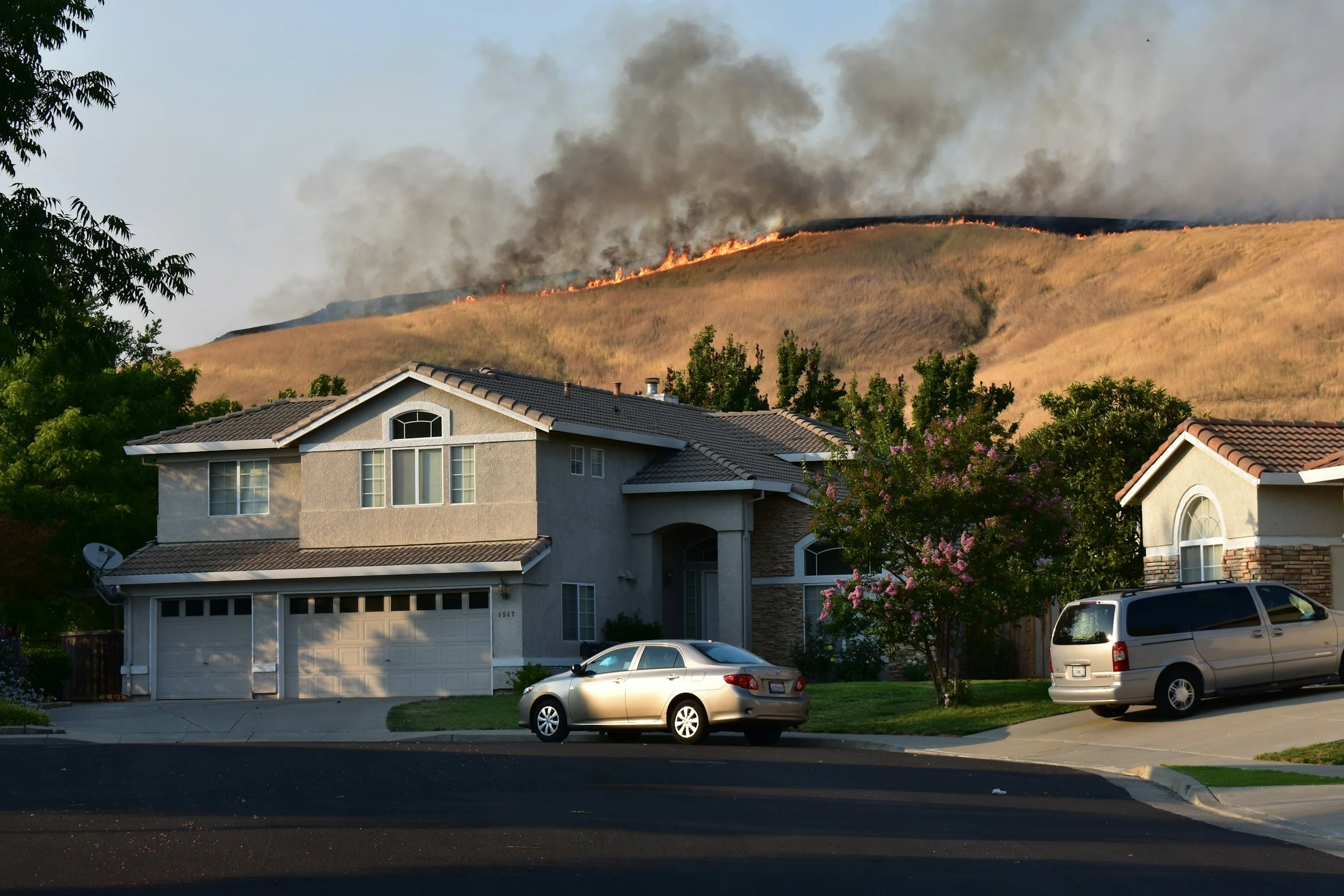
Photo: Adam Young
In 2025, the Utah Legislature passed House Bill 48 (primary intent: to increase awareness of wildfire risk and encourage property owners to share the responsibility of reducing that risk) — a law that put about 60,000 Utah structures on a new statewide wildfire risk map and required insurance companies to use that map when pricing coverage.
Almost overnight, thousands of homeowners in wildland-urban interface (WUI) communities saw their premiums climb, their policies threatened, or their options narrow dramatically.
For HOA boards, that shift raised a question that can't wait for summer: What happens to your community's property values, insurance access, and safety when you delay wildfire mitigation — and what does action actually buy you?
This article lays out the real financial and legal cost of inaction, and the concrete, measurable benefits of getting ahead of fire season before it arrives.
The financial impact of wildfire exposure
Rising premiums and vanishing coverage
Insurance is the first place HOAs feel wildfire risk — and it's already hitting Utah communities hard. Premiums for homeowners in wildfire-prone areas statewide have risen by 20% in a single year. Nationally, HOAs in fire-prone regions are facing surcharges and non-renewals driven by a simple calculus: unmitigated properties are a liability that carriers are less and less willing to carry.
20%
Single-year premium increase for some Utah WUI homeowners
60,000
Utah structures now flagged as high-risk under HB 48
30%+
Pacific Northwest HOA insurance increase since 2020
When HOAs fail to document mitigation efforts, insurers have fewer reasons to keep them in standard markets — which means fewer carriers, higher rates, higher deductibles, or coverage that quietly shrinks when a community needs it most. Under HB 48, insurers must now justify rate increases of 20% or more in writing. That's new consumer protection — but it also means the increases are real, documented, and happening.
Property values and resale challenges
Beyond insurance, an HOA's wildfire risk posture quietly shapes how the housing market sees every home in the community. Buyers and their lenders are increasingly sensitive to wildfire exposure. Homes in communities without visible mitigation plans take longer to sell, attract fewer qualified buyers, and face more scrutiny during appraisal and underwriting. Meanwhile, communities with documented defensible space programs and fire-resistant landscaping are increasingly positioned as lower-risk — which translates directly to more competitive pricing and faster sales.
Under Utah's HB 48, mitigating wildfire risk may improve a property's insurability — meaning your HOA's collective action directly affects whether individual homeowners keep their coverage and at what cost.
Alpine Forestry has worked with Pinebrook HOA and similar Utah communities for years — helping boards build a plan, complete the work across many acres and neighborhoods, and document every step of the way. What sets the process apart is what happens at the end: Alpine Forestry prepares a professional letter for your insurance carrier that includes before-and-after ground documentation, overhead canopy density comparisons, and a written record of all work completed by certified professionals. Boards get credit for the work. Insurers get the proof they need. And the community gets to move forward with confidence.
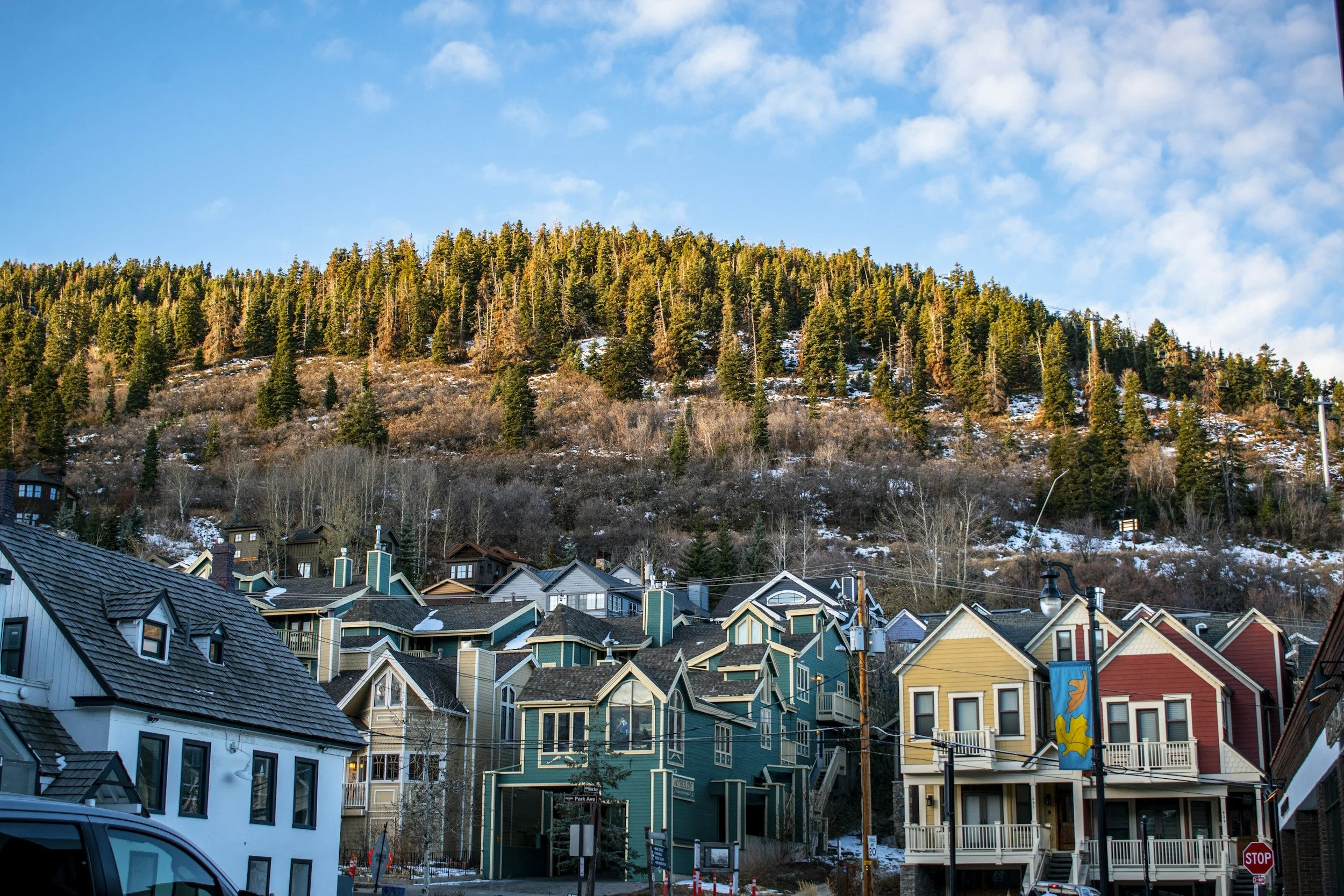
Park City, Utah. Photo: Gabriel Tovar
Legal and liability risks for HOA boards
Wildfire mitigation isn't just a financial question — it's a governance one. HOA boards have a fiduciary duty to manage foreseeable risks to community property and resident safety. Wildfire, in a WUI-designated community, is a foreseeable risk. Failing to act on it creates legal exposure in several directions:
Negligence claims from homeowners who suffered losses in a fire that spread through unmanaged common areas or community vegetation
Regulatory violations if local WUI codes (now required under HB 48) aren't followed
Difficulty in liability claims processing when no mitigation documentation exists
The flip side: boards that commission professional risk assessments, develop formal mitigation plans, and document their implementation are building a legal record of due diligence. That record matters — both in preventing litigation and in defending against it if a fire does occur.
The benefits of proactive wildfire mitigation
What mitigation actually looks like and what it delivers
Effective wildfire mitigation for an HOA community isn't a single project — it's a layered strategy. The core components include:
Defensible space creation around structures and common areas
Vegetation management and fuel reduction across the community
Identification of ignition-prone landscaping (and possible replacement with fire-resistant natives if desired)
Structure hardening: vents, roofing, decks, and fencing materials
A documented emergency preparedness plan tied to local evacuation routes
Communities that complete these steps gain real leverage with insurers — some carriers offer discounts specifically for HOAs with formal fire mitigation policies on file. Beyond premiums, mitigation positions a community to qualify for state and federal grants that can offset significant portions of the cost.
Community-wide advantages
The benefits extend well beyond the balance sheet. Homeowners in communities that have completed mitigation work consistently report greater peace of mind, and when boards communicate the process clearly, the shared effort tends to build neighborhood cohesion.
There's also a reputational layer: communities known for proactive fire safety attract responsible buyers, maintain engaged homeowners, and are better positioned when working with local fire agencies on evacuation planning and emergency response. When it comes to the safety of your neighbors, your homes, and your coverage — the risk of doing nothing simply isn't worth it.
Real financial relief is already available for many Utah WUI homeowners — but only for those who act early. In recent years, programs like the FLASH Program have helped HOA residents in the Park City area access up to $6,000 per property in reimbursements for defensible space work, covering 25% to 75% of each project's cost, with $75,000 in community funds available on a first-come, first-served basis. Programs like this don't just offset mitigation costs — they make participation genuinely accessible for homeowners who might otherwise put it off.
The catch? These funds don't wait for fire season. Spring is the time to act. Get the work done now, document it properly, and head into summer knowing your property and your community are covered.
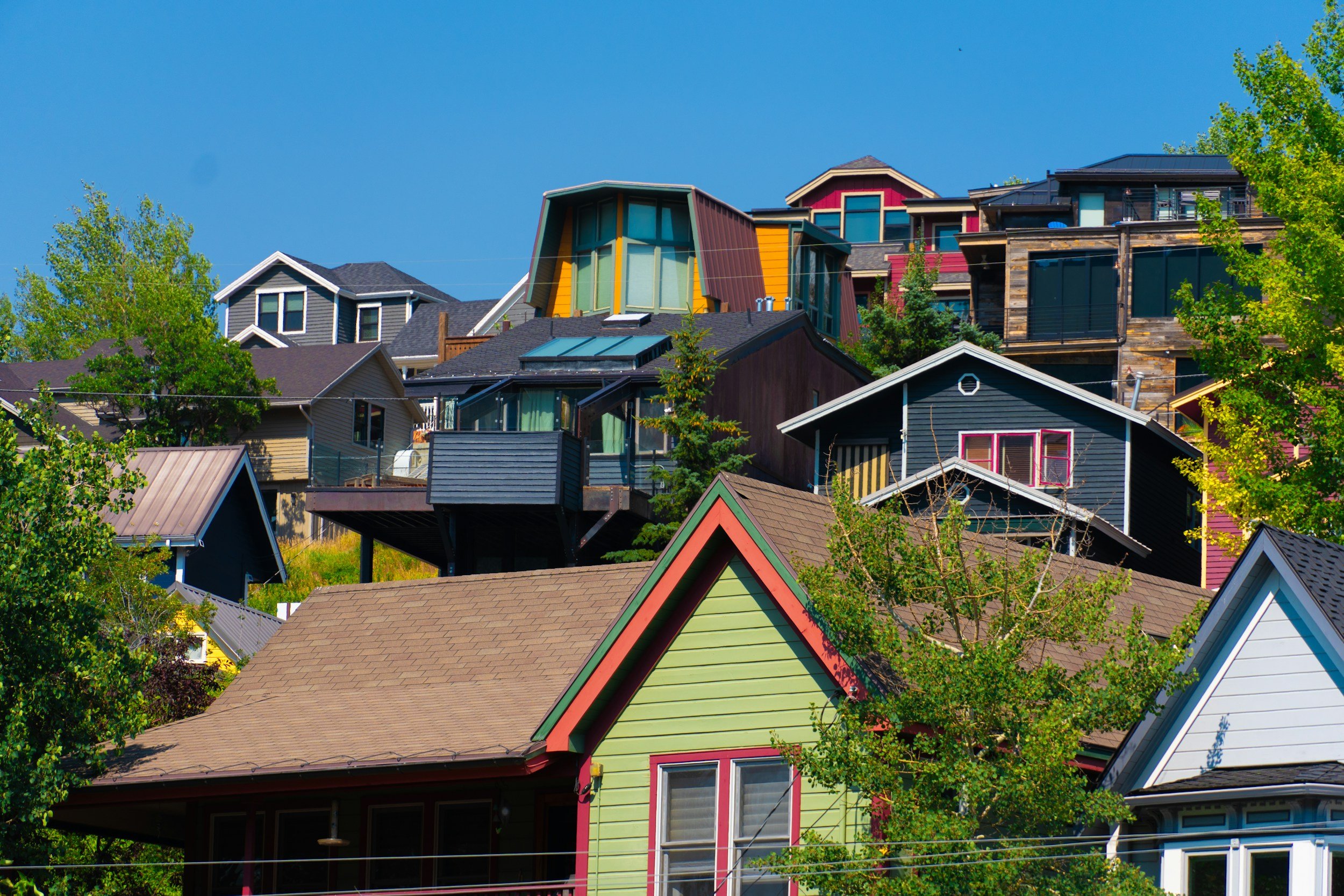
Photo: Faye Saravani
Implementation strategies for HOA boards
Step 1: Start with a professional wildfire risk assessment
Before a community can build a mitigation plan, it needs an honest, expert picture of its current risk. A professional assessment maps existing vegetation, identifies fuel accumulation, evaluates structure placement and materials, and produces a prioritized list of actions — giving the board something concrete to present to homeowners and to bring to insurance conversations.
Step 2: Build a phased, funded plan
Mitigation doesn't have to happen all at once. A phased plan with realistic timelines is far more achievable — and more credible to insurers and homeowners — than an overwhelming single-year project. Funding options include special assessments, reserve allocations, and state and federal grants available specifically for WUI communities. The key is to establish clear maintenance standards for all properties, not just common areas, so the community moves together.
Step 3: Bring homeowners in early
The communities that succeed at mitigation are the ones where residents understand why it matters — not just for the HOA's insurance bill, but for their own coverage, their home's value, and their family's safety. Educational workshops, clear ROI communication, and shared progress milestones are all tools that turn reluctant compliance into genuine community buy-in. HOA cost-sharing or rebate programs — like the FLASH Program model — give homeowners who might otherwise hesitate a concrete financial reason to participate.
One of the most common concerns Alpine Forestry hears from WUI homeowners is about views. Nobody wants to lose the treeline they bought the property for. That concern is always taken seriously — skilled mitigation isn't about removing everything, it's about removing the right things. The goal is a property that's both fire-resilient and beautiful, with experienced crews who know how to find that balance. When homeowners see that their views and their safety aren't in conflict, getting everyone on board becomes a much easier conversation.
The time to act is this spring
The cost of doing nothing isn't abstract. It's 20% higher premiums. It's a coverage non-renewal letter arriving weeks before fire season. It's a legal claim after a fire moves through unmanaged community vegetation. It's a "for sale" sign sitting in a yard longer than it should because buyers are asking questions a board can't answer.
Proactive communities — the ones that invest in assessment, planning, and implementation before summer arrives — build something that unmitigated communities don't have: resilience. And in Utah's wildland-urban interface, resilience isn't just a value. It's a measurable competitive advantage.
Ready to take the first step?
Alpine Forestry works with HOA boards across Utah on every stage of wildfire mitigation — from risk assessment to vegetation management to full community mitigation planning. Here's how to get started:
01 Schedule a professional wildfire risk assessment for your community this quarter
02 Share this article with your HOA board before your next meeting
03 Download our free wildfire preparedness checklist for HOA communities
HOA Wildfire Preparedness
Checklist
A practical guide for boards and homeowners in Utah's wildland-urban interface — before fire season arrives.
Not sure where to start?
We handle it all.
Alpine Forestry works with HOA boards and individual homeowners across Utah's WUI communities — from professional risk assessment to full vegetation management and insurance documentation.
Source Links
Utah-Specific & Legislative
Utah Division of Forestry, Fire & State Lands — HB 48 FAQ https://ffsl.utah.gov/wuirisk/
Utah Wildfire Risk Explorer (map tool) https://wildfirerisk.utah.gov
Standard-Examiner — HB 48 fee assessment coverage https://www.standard.net/news/2025/dec/25/utah-to-start-assessing-fees-on-properties-in-high-risk-wildfire-areas-to-encourage-prevention/
Utah News Dispatch — HB 48 overview https://utahnewsdispatch.com/briefs/utah-to-start-assessing-fees-on-properties-in-high-risk-wildfire-areas-to-encourage-prevention/
KPCW — High-risk WUI map release https://www.kpcw.org/state-regional/2025-12-18/state-releases-map-of-high-risk-wildfire-areas-assessed-new-fee
TownLift (Park City) — WUI map and fee details https://townlift.com/2025/12/new-state-map-shows-which-utah-homes-will-pay-wildfire-mitigation-fee/
Fox 13 — Utah wildfire risk maps and insurance concerns https://www.fox13now.com/news/local-news/southern-utah/utahs-new-wildfire-risk-maps-spark-insurance-concerns-for-homeowners
SunCrest HOA — HB 48 homeowner impact explainer https://suncrestlifestyle.com/how-utahs-hb-48-impacts-suncrest-homeowners-wildfire-risk-fees-and-insurance-explained
ProgramBusiness — HB 48 insurance angle https://programbusiness.com/news/utah-bill-seeks-to-reduce-high-homeowners-insurance-costs-by-redefining-wildfire-risk-zones/
Pew Charitable Trusts — Utah wildfire action 2025 https://www.pew.org/en/research-and-analysis/articles/2026/03/25/utah-takes-action-on-wildfire-risk-funding-in-2025
HOA Insurance & Financial Impact
HOA Member Services — HOA insurance cost increases https://hoamemberservices.com/navigating-hoa-insurance-cost-increases/
Idaho HOA Insurance — wildfire premium analysis https://www.pureriskadvisors.com/business-insurance/specialized-business-insurance/idaho-hoa-insurance
Oregon HOA Insurance — wildfire premium analysis https://www.foagency.com/business-insurance/specialized-business-insurance/oregon-hoa-insurance
HSM SF — California wildfires and HOA insurancehttps://www.hsmsf.com/post/california-wildfires-and-their-impacton-insurance-what-to-know
National Data & Government Sources
U.S. GAO — Homeowners Insurance and Disaster-Prone Areas (Feb 2026) https://www.gao.gov/products/gao-26-107867
Pew Charitable Trusts — Wildfire funding and prefire risk reduction https://www.pew.org/en/research-and-analysis/articles/2026/03/25/utah-takes-action-on-wildfire-risk-funding-in-2025
Deep Sky Climate — Insurer retreat and wildfire risk 2025https://www.deepskyclimate.com/blog/insurers-retreat-as-2025-wildfire-risk-reaches-dangerous-levels
Helpful Links
Not Sources, But Worth Bookmarking
Firewise USA — NFPA community certification program https://www.nfpa.org/firewise
Insurance Institute for Business & Home Safety — Wildfire Prepared Home https://ibhs.org/wildfire/
Utah HOA laws and regulations overview https://www.steadily.com/blog/utah-hoa-laws-regulations