Planting for the Future: Native Trees and Shrubs That Help Protect Your Property
May 2026 • Reading time: ~6 min
The right plants don't just look beautiful — they work with the landscape to reduce wildfire risk, support the ecosystem, and increase the long-term value of your home.
If you live in the foothills above Park City, your property sits inside one of the most beautiful (and most fire-prone) landscapes in the American West. What you plant, and where, matters more than most homeowners realize.
Spring is prime planting season in the Wasatch Back: the soil is workable, moisture is still reliable, and new trees have the best chance of establishing before summer heat sets in. But beyond aesthetics, the species you choose can directly affect your home's resilience to wildfire, your water usage, and the health of the broader forest ecosystem around your property.
Here's what to know — and what to plant.
Why Native Species Are the Smarter Investment
Native trees and shrubs have co-evolved with Utah's climate over thousands of years — already adapted to the freeze-thaw cycles of a 7,000-foot elevation, the alkaline soils of the Wasatch, and the long dry stretches of late summer. Once established, most require far less supplemental irrigation than ornamental alternatives.
For homeowners in the WUI (Wildland-Urban Interface), the case goes even deeper. Non-native and invasive plants — particularly cheatgrass — dramatically increase fire fuel loads, while strategically placed native species, properly maintained, form part of an effective defensible space strategy. USU
What is the WUI?
The Wildland-Urban Interface is the zone where developed properties meet undeveloped wildland. Most of Park City's residential neighborhoods fall within mapped WUI boundaries, and as of 2026, Park City formally adopted the International Wildland-Urban Interface Code — meaning vegetation management and defensible space aren’t just recommendations but now regulatory requirements.
Native Trees Worth Planting This Spring
The following species are native to the Wasatch Range and well-suited to Park City's elevations and conditions.
vation properties. Important: not recommended to be planted near the home due to ; best planted in Zone 3. Millcreek Gardens
Quaking Aspen
Populus tremuloides
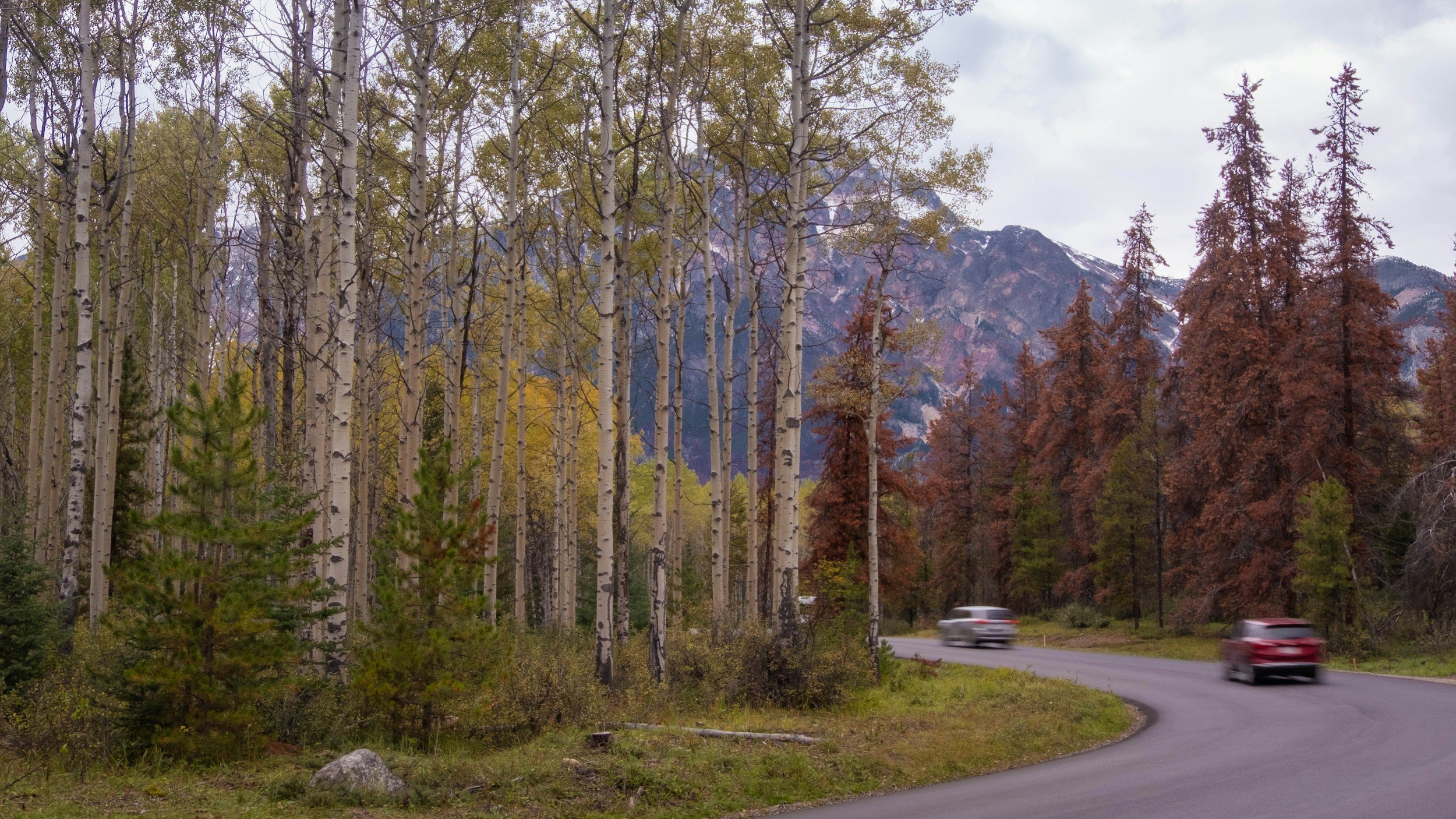
Utah's most iconic deciduous tree. High-moisture foliage makes it one of the more fire-resistant choices in the region. Performs best in groupings — connected root systems — with access to moisture. Stunning in all seasons: gold fall color, distinctive white bark in winter.
Bigtooth Maple
Acer grandidentatum
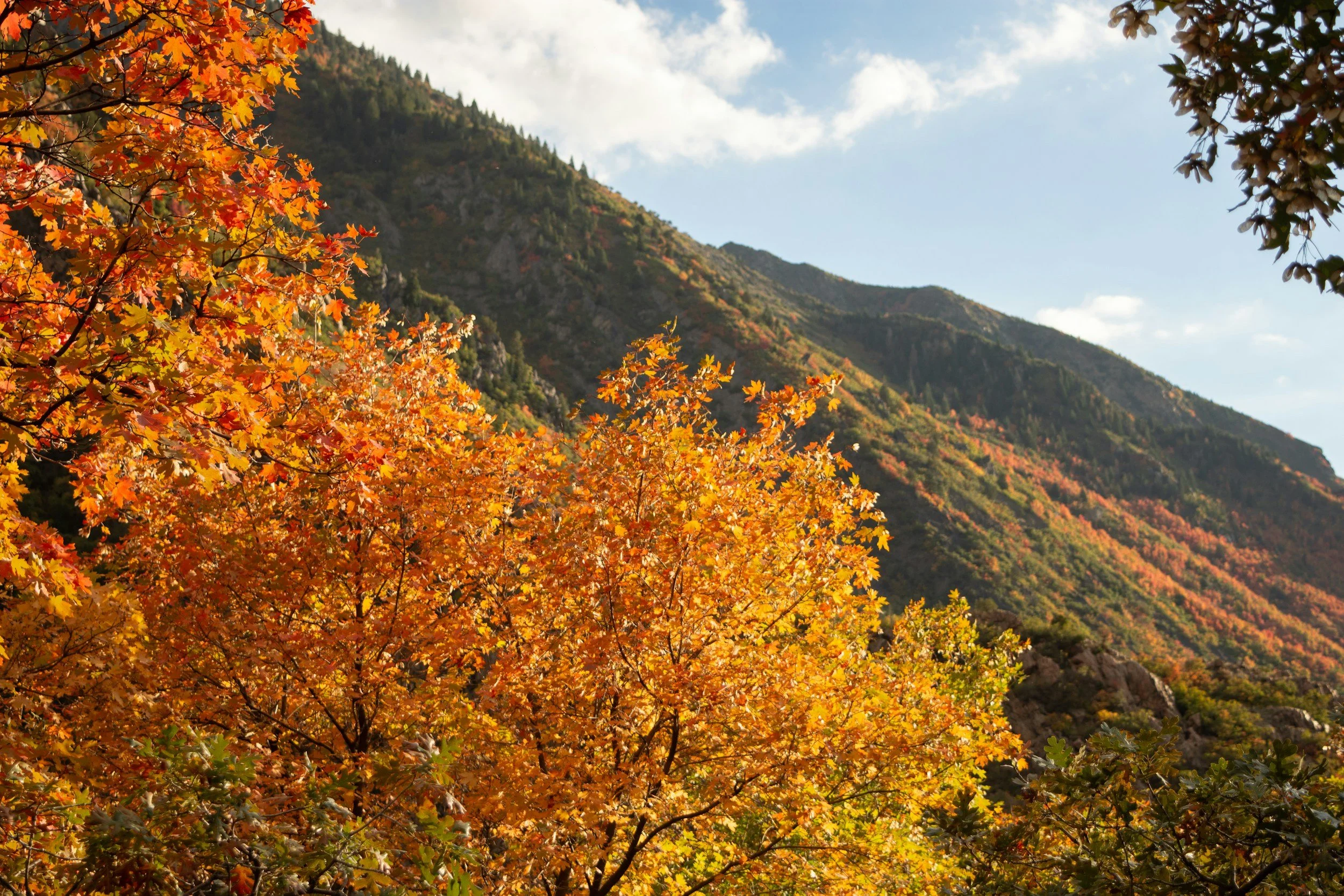
The maple responsible for Utah's outstanding fall color in the foothills and mountains. Naturally canyon-adapted, moderate water needs, excellent multi-season interest. A strong canopy anchor for naturalistic landscape design.
Utah Serviceberry
Amelanchier utahensis
A small tree with beautiful white spring flowers, edible berries, and vibrant fall color. Thrives in well-drained mountain soils. One of the most ornamentally rewarding native choices for a refined landscape.
Rocky Mountain Juniper
Juniperus scopulorum
Highly drought-resistant, with year-round blue-green foliage — a strong choice for windbreaks and visual screening. Important: junipers are highly flammable and should never be placed within 30 feet of any structure.
Curl-Leaf Mountain Mahogany
Cercocarpus ledifolius
A broadleaf evergreen with exfoliating bark, excellent drought tolerance, and the ability to fix its own nitrogen — ideal for rocky, poor soils. Slow-growing but centuries-lived. A striking, low-maintenance specimen for high-elevation properties. Best planted in Zone 3.
The WUI Planting Zones — What Goes Where
Effective fire-adapted landscaping is about species and placement. Park City's adopted WUI code divides the area around structures into three zones, each with specific vegetation requirements. Park-city
The area directly surrounding your home. Nothing combustible here.
Plants are allowed here — but spacing, species, and maintenance all matter.
Native plantings are welcome here — managed thoughtfully to slow potential fire spread.
The Hidden Risk: Dead Trees and Debris
Even a well-designed native landscape can become a fire hazard if dead and dying trees are left in place. Dead standing trees and accumulated debris (downed branches, bark litter, dead understory) are all impactful fuels for fire spread.
Annual inspection and removal of dead trees, combined with debris clean-up, is foundational to a defensible property in the WUI. And spring, before the dry season, is the right time to assess and address what winter has left behind.
Spring property checklist: Walk your property and note any dead or declining trees, low-hanging branches within 10 ft of your home, accumulated debris, and dense shrub masses within 30 ft of the structure. This becomes your scope for seasonal tree care.
When the Oak Looks Dead — But Probably Isn't
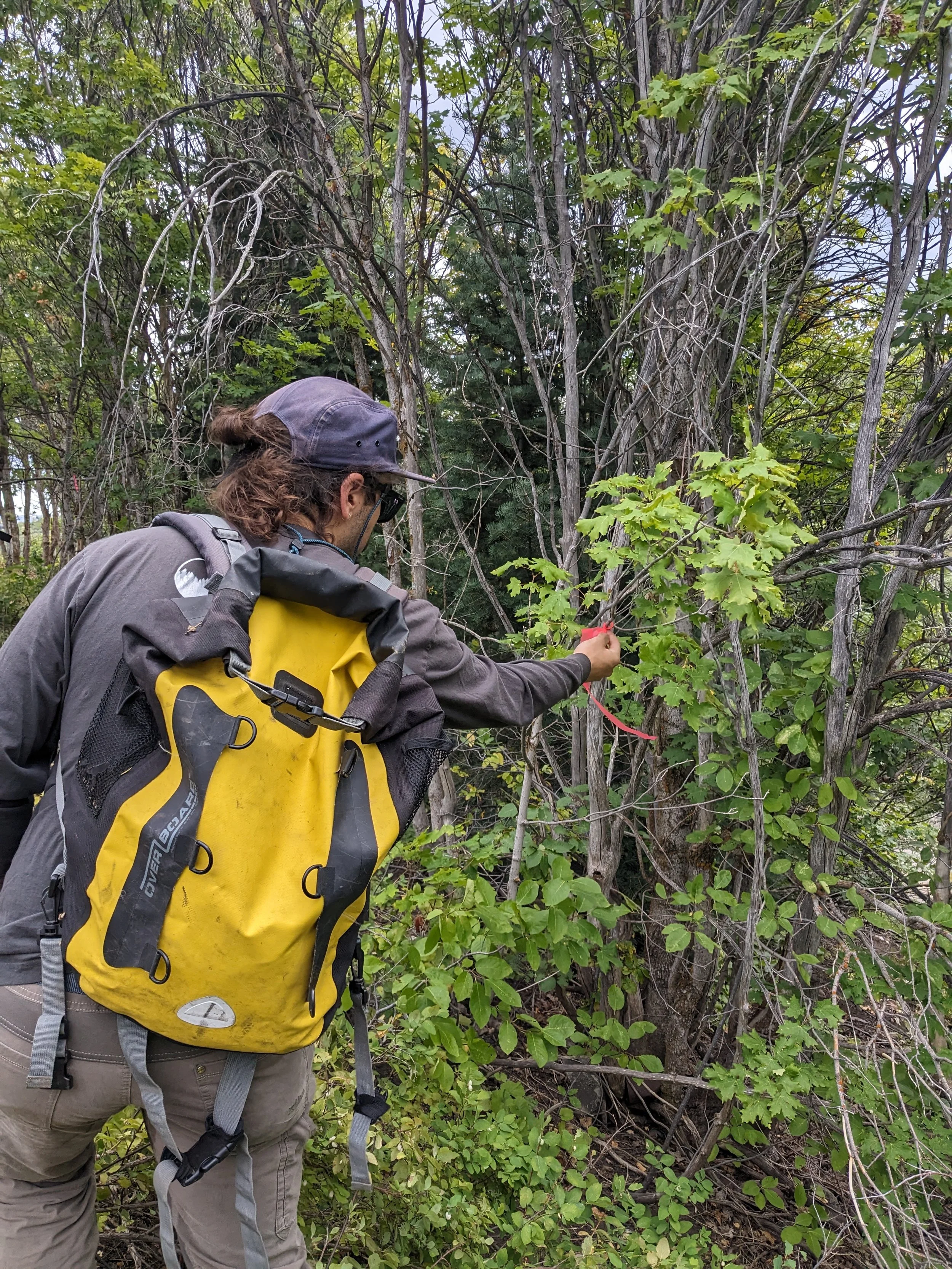
If the Gambel oak on your property came out of winter looking scorched and brown, you're not alone. Late spring frosts — common at Park City's elevation even into May — frequently catch Gambel oak (Quercus gambelii) mid-bloom, killing the new leaf growth right after it breaks dormancy. The result is dramatic: leaves that emerged bright green turn papery brown almost overnight, branches look blackened at the tips, and the whole shrub or tree can take on the appearance of something that didn't survive winter. It's alarming, but in most cases, it's not a death sentence.
Gambel oak is one of the most resilient plants in the Wasatch. It's a clonal species, meaning what looks like a single shrub is often connected to a vast underground root network that's been accumulating energy for decades — sometimes centuries. That same system is what allows Gambel oak to resprout vigorously after wildfire, and frost damage triggers the same response. The rule of thumb: wait before you cut. Give it until late June or early July. New growth will emerge lower on the stems or directly from the root crown — small, bright green leaves pushing out from what looked like dead wood.
To check a branch yourself: Scratch lightly through the outer bark with your fingernail; green tissue underneath means it's alive. Grey-white or dry means that stem is done.
This matters beyond aesthetics: Dead Gambel oak branches are highly flammable and a documented fire risk in WUI properties.
Removing gambel oak before peak fire season is a meaningful defensible space step. But resist the urge to cut everything back hard in April. Let the tree show you what it's keeping first. Once you can see clearly what has and hasn't recovered, you can safely remove the dead wood.
Let's Assess Your Property This Spring
Our team provides tree health assessments, limbing, hazard felling, and dead debris removal for WUI properties across the Park City area. Spring appointments are filling quickly — reach out to schedule your assessment before the dry season arrives.
Serving Park City, Pinebrook, Jeremy Ranch, Summit Park, and surrounding areas.